


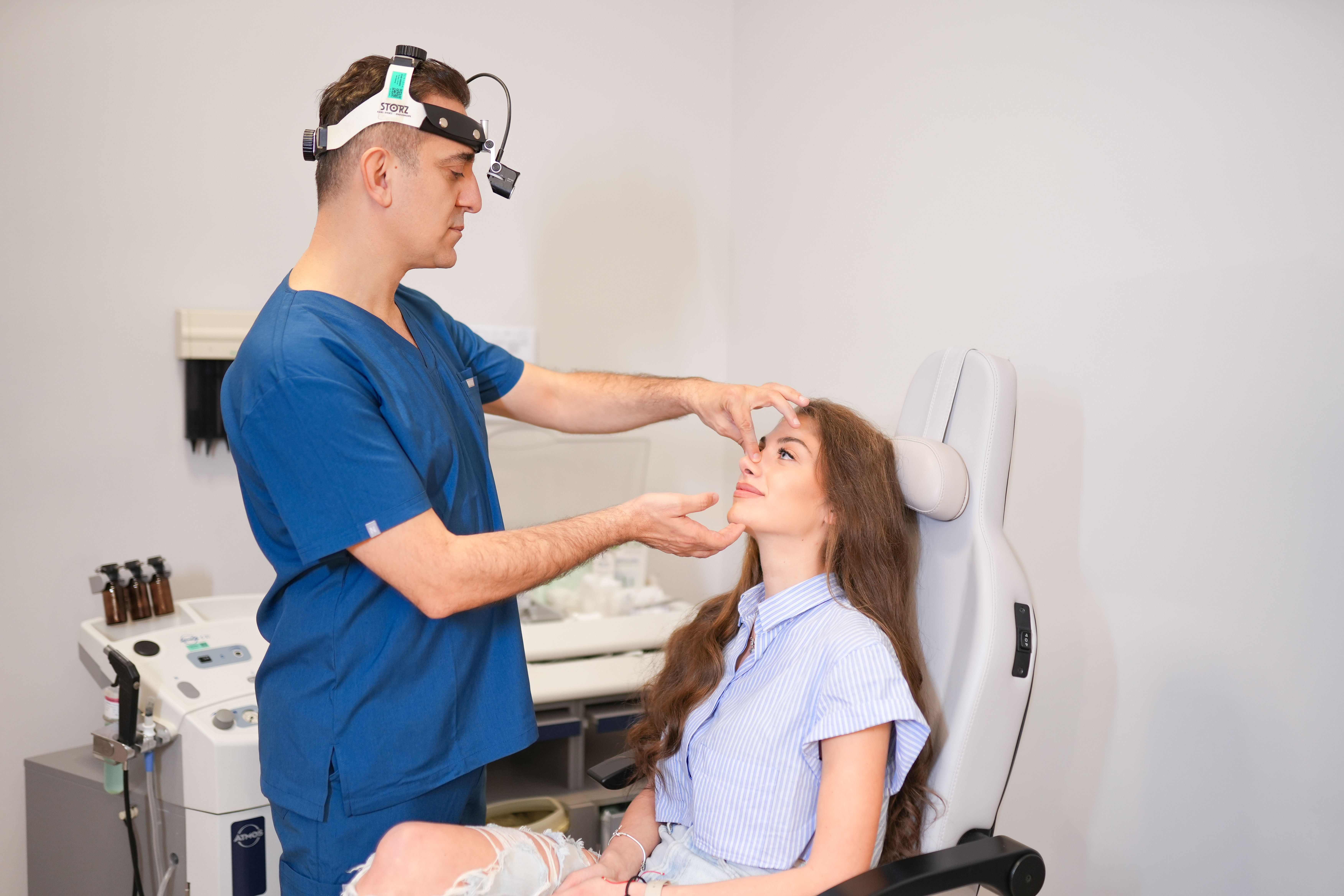
Rhinoplasty, commonly known as a nose job, is one of the most transformative procedures in cosmetic surgery. Whether you are looking to refine the shape of your nose, improve its proportion with your other features, or address a functional concern, understanding the recovery journey is just as important as knowing the results you can achieve.
At Kat & Co in Edgbaston, Birmingham, we believe that well-informed patients have the best experiences. So if you are wondering how long rhinoplasty recovery takes, here is an honest, week-by-week guide to what most patients can expect.
Recovery timelines vary from person to person. Several factors influence how quickly you heal, including the complexity of your procedure (open vs. closed rhinoplasty), whether bone work was involved, your age and general health, and how carefully you follow your aftercare instructions. Most patients can expect the main healing phase to last around six weeks, with full, settled results taking up to twelve months to emerge.
The first week after rhinoplasty is typically the most challenging. You will have a splint or cast on your nose to protect the new structure while initial healing begins. Swelling and bruising around the nose and eyes are completely normal and will be at their most significant during these early days.
Expect some nasal congestion, as the passages are swollen internally. This is entirely part of the process and not a cause for concern. You will need to sleep with your head elevated to help reduce swelling, and you should avoid blowing your nose completely during this period.
Most patients take at least seven to ten days off work, and activity should be limited to gentle, short walks. No bending, lifting, or strenuous exercise of any kind during this first week.
At around the seven to ten day mark, your surgeon will remove the splint or cast. This is often an exciting milestone - you will get your first proper look at your new nose shape. However, it is important to manage expectations at this stage. The nose will still be quite swollen and the final shape is far from fully visible yet.
Bruising typically fades considerably by the end of week two, and many patients feel comfortable returning to a desk-based job or working from home. You should still avoid any activity that raises your heart rate significantly or puts your face at risk of impact.
By weeks three and four, you will notice a meaningful reduction in swelling. Around sixty to seventy percent of visible post-operative swelling will have subsided, and your nose will begin to look much closer to its eventual shape. Most patients feel confident in social settings at this point, and makeup can be applied to cover any residual discolouration.
You can gradually return to light exercise during this phase, but contact sports and any activity carrying a risk of impact to the nose are still off limits. Be mindful of sun exposure too, as UV rays can worsen swelling and affect the healing of surface scarring.
By the end of week six, the vast majority of patients feel largely back to normal. Swelling has reduced considerably, energy levels are restored, and most forms of moderate exercise can be resumed. At this stage, many patients feel genuinely excited about their results as the shape of the nose becomes more clearly defined and refined.
Your surgeon at Kat & Co will review your progress at this point and advise on when it is safe to resume any remaining restricted activities.
One of the most important things to understand about rhinoplasty recovery is that the final result takes real time to fully reveal itself. The tip of the nose in particular can remain slightly swollen for several months after surgery. This is due to the density of the skin in that area and the fact that it takes longer for residual fluid to completely disperse.
By around the three-month mark, your results will look significantly clearer and more defined. By twelve months, your nose will be fully settled into its final shape, and the results you have been working towards will be entirely visible.
Follow all aftercare instructions given by your surgeon carefully - these guidelines are in place to protect both your health and your results. Avoiding alcohol and smoking in the weeks before and after surgery is essential, as both significantly impair the body's ability to heal. Stay out of direct sunlight and apply a high-SPF sunscreen whenever you go outdoors. Attend all scheduled follow-up appointments without fail, and do not hesitate to contact your clinic if something does not feel right.
If you are thinking about rhinoplasty and would like to understand whether it is the right option for you, the surgical team at Kat & Co in Edgbaston would love to help. We take genuine time to understand your goals, walk you through every stage of the journey, and support you from your initial consultation all the way through to your final results.
Get in touch today to book your consultation and take the first confident step towards the look you have been dreaming of.


