


Gender affirming breast augmentation, sometimes called MTF top surgery, is a surgical procedure that creates fuller, naturally shaped breasts to help your body better reflect who you are. It uses breast implants, your own fat, or a combination of both to achieve results that feel authentic to you.
While the surgical technique shares elements with standard breast augmentation, gender affirming surgery requires a deeper understanding of the trans body. Differences in chest wall shape, breast tissue development, skin laxity, and the effects of hormone therapy all influence implant selection, placement, and the approach your surgeon takes. Choosing a surgeon with true specialist breast expertise, rather than a generalist cosmetic surgeon, makes a significant difference to both your results and your experience.
Not all breast augmentation surgeons are the same, and for gender affirming surgery, your surgeon's depth of specialist knowledge matters more than almost anything else.
Mr Seni Mylvaganam is a Consultant Oncoplastic Breast Surgeon, a specialism that goes far beyond cosmetic training. His entire career has been dedicated to the anatomy, physiology, and surgery of the breast, from complex reconstruction after cancer to refinement of form and symmetry. As NHS Clinical Lead for Breast Services at Royal Wolverhampton Hospitals, he performs breast surgery every single working day. That depth of expertise informs every gender affirming procedure he undertakes at Kat & Co. Find out more about Mr Mylvaganam's approach to male-to-female top surgery here.
Consultant Oncoplastic Breast Surgeon

The most common approach for MTF top surgery
Silicone implants are placed beneath the breast tissue or chest muscle to create volume, shape, and projection. Modern silicone implants closely replicate the feel of natural breast tissue, and offer reliable, predictable results.
Best for: Those with limited breast tissue development; those seeking a specific cup size or projection; those who don't have sufficient donor fat.
Implant options: Round and anatomical (teardrop) profiles are available, in a range of sizes and projections. Mr Seni will guide you through the options that suit your frame.
Your own tissue, naturally redistributed
Fat is harvested from another area of your body (such as the abdomen, thighs, or flanks) using liposuction, processed, and injected into the breast. The result feels entirely natural because it is your own tissue.
Best for: Those seeking subtle enhancement (typically one cup size); those who prefer to avoid implants; those with suitable donor fat available.
Consideration: Volume is limited by available donor fat, and some reabsorption is expected. Multiple sessions may be needed for larger increases.
Implants and fat transfer combined
A combination approach uses implants for reliable volume and fat transfer around the implant to soften edges, improve upper pole transition, and create a more natural contour overall.
Best for: Those seeking a natural feel alongside reliable volume increase; those who want to minimise the visible look of the implant beneath the skin.
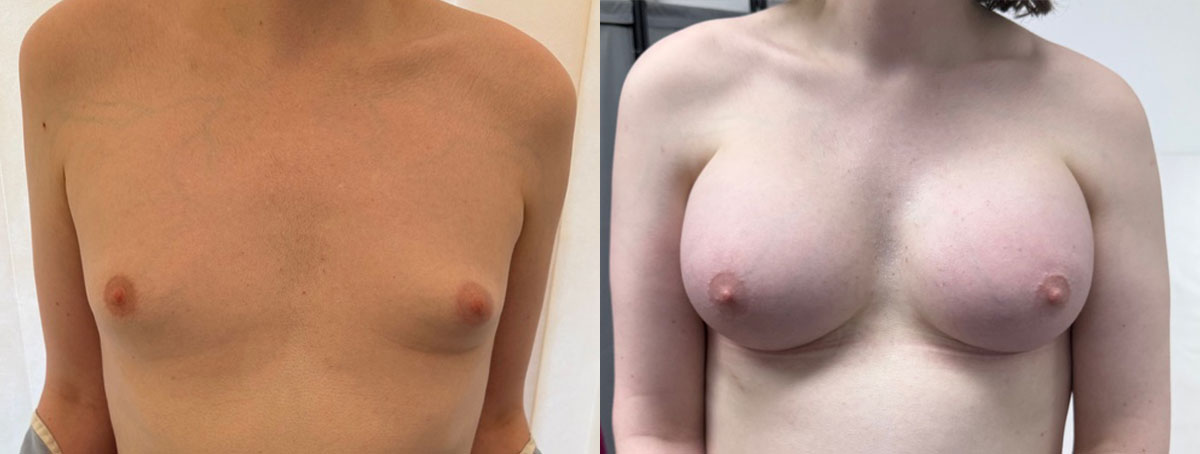
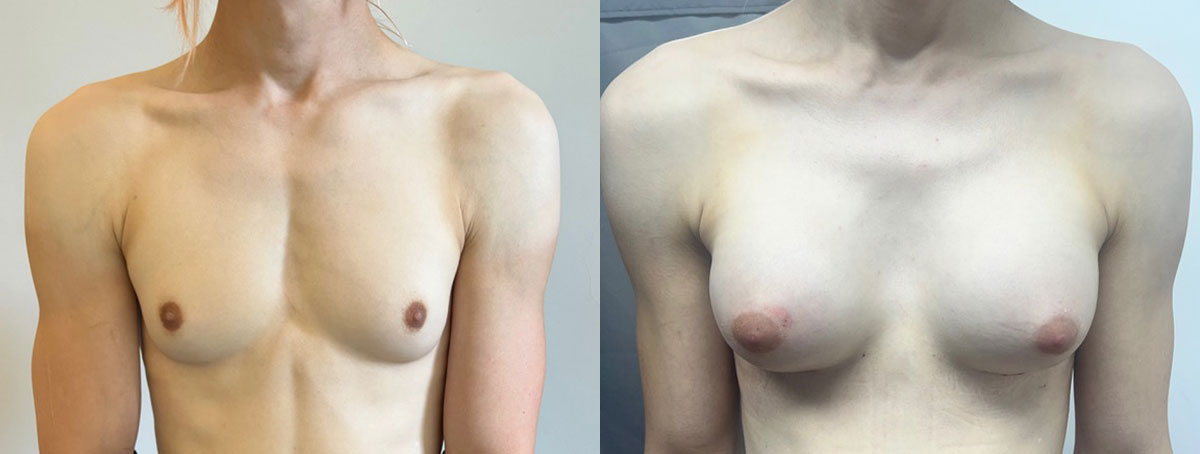
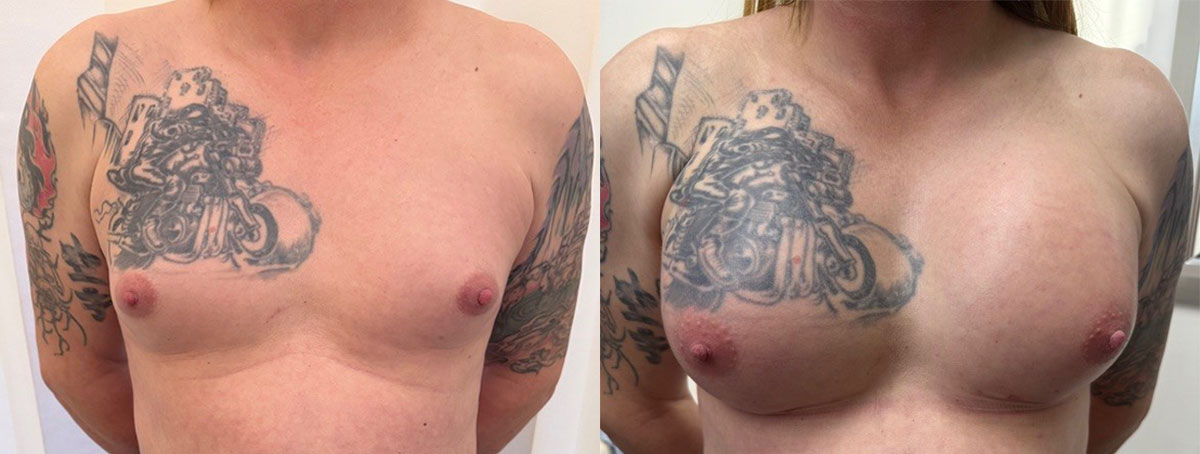
Every result is as individual as the person it's for. Mr Seni takes time to understand your goals before surgery, and applies his specialist expertise in breast form, symmetry, and proportion to deliver results that look and feel natural to your body.
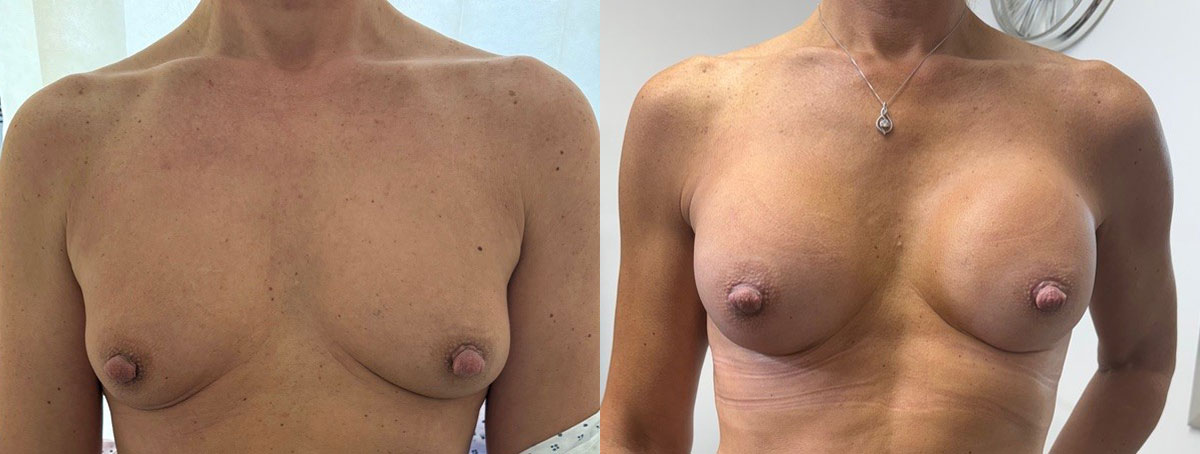
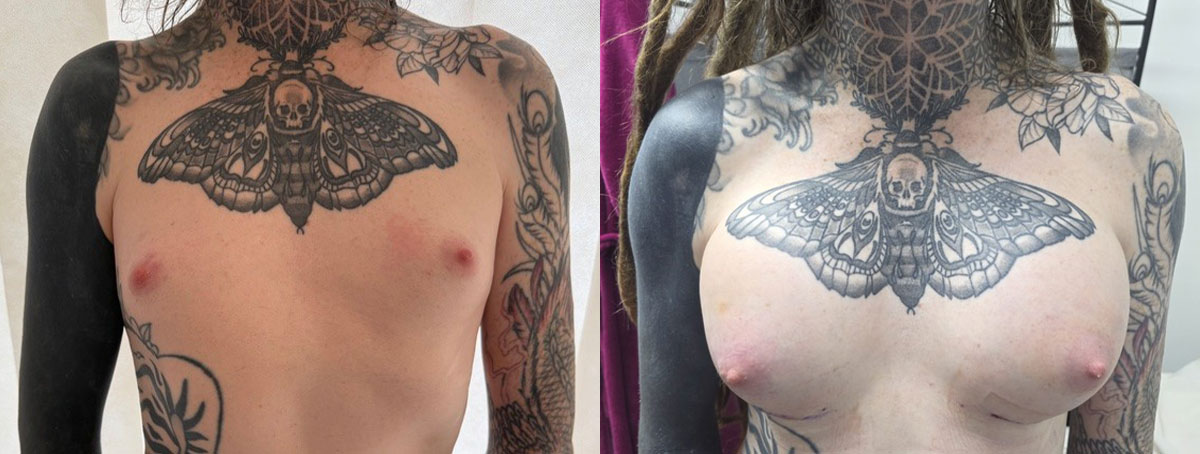
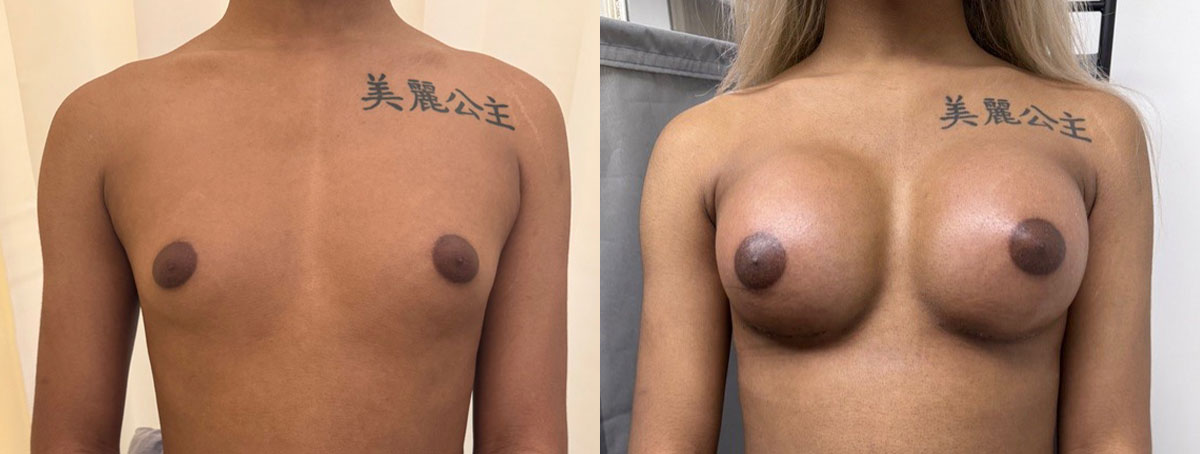
Eligibility for gender affirming surgery is more straightforward than many people expect. The most important step is booking a consultation, Mr Seni will assess your individual circumstances and answer any questions you have. As a general guide, suitable candidates typically:
✓ Are aged 18 or over
Gender affirming breast augmentation is available to adults aged 18 and over.
✓ Have a diagnosis of gender incongruence
A formal diagnosis, typically from a GP, gender specialist, psychiatrist, or clinical psychologist, is required. A diagnosis made within the last 12 months is preferred by most private providers. If you don't yet have a diagnosis, we can advise on next steps at your consultation.
✓ Have a referral or supporting letter
A letter from your GP or a qualified gender specialist is required before proceeding to surgery. This confirms your diagnosis and confirms you have been assessed as suitable for surgical intervention. We can advise you on what this letter should include.
✓ Are in good general health
You should be in good physical and mental health. Mr Seni will carry out a full pre-operative assessment to confirm you are fit for surgery under general anaesthetic.
✓ Are a non-smoker (or are prepared to stop)
Smoking significantly affects healing and surgical outcomes. We ask patients to stop smoking for a minimum of six weeks before and after surgery.
✓ Have considered the role of hormone therapy
Hormone replacement therapy (HRT) is not an absolute requirement, but taking oestrogen for at least 12 months prior to surgery allows breast tissue to develop as much as possible before augmentation, which often leads to better results. If you have not started HRT, or have only recently begun, Mr Seni will discuss what this means for your specific options.
Not certain whether you qualify? Don't let uncertainty hold you back. Our free initial consultation is the right first step, there's no pressure and no commitment, just an honest, supportive conversation with Mr Seni about what's right for you.
Meet Mr Seni in person at our Edgbaston clinic. This is a relaxed, confidential conversation about your goals, medical history, and options. There is no pressure and no obligation. Mr Seni will explain your surgical options in plain language and answer every question you have.
Once you decide to proceed, you'll attend a pre-operative assessment to confirm you are fit for surgery. This includes health checks, measurements, and implant sizing. You'll also have the opportunity to discuss your chosen implant profile and size with Mr Seni and refine your plan before your operation date.
Your procedure is performed as a day case under general anaesthetic, typically taking 1.5 to 2 hours. You'll be cared for by our experienced clinical team throughout, and you can go home the same day once you've recovered from the anaesthetic — you'll need a responsible adult to take you home and stay with you overnight.
Your recovery is fully supported by the Kat & Co team. You'll receive a dedicated aftercare plan, follow-up appointments with Mr Seni, and direct access to your care coordinator if you have any concerns. We are with you every step of the way.
45 Minutes
Twilight Sedation
Daycase (no overnight stay)
3 - 7 days
Bruising, swelling, temporary numbness
Infection, bad scarring, asymmetry, bleeding, capsular contracture
1 week, 2 weeks, 3 months (after surgery)
1 - 2 weeks
2 weeks post-op - walking, 4 weeks post-op - fast walking, 6 weeks post-op - everything
12 weeks until final result. Scars continue to improve over 18 months
MTF Breast Augmentation
From £5,995
Your package includes:
Finance options available




