


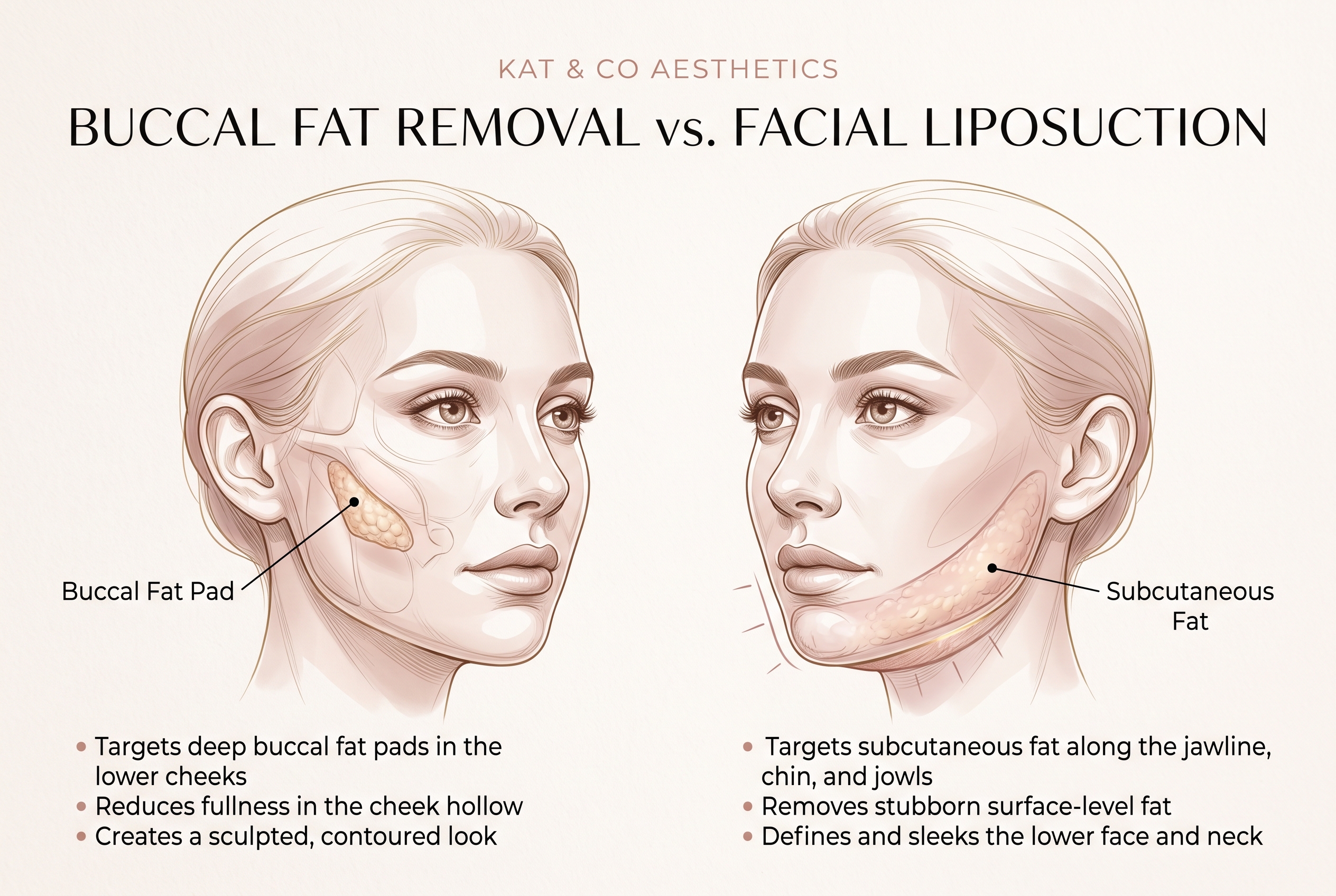
Buccal fat removal reduces part of the buccal fat pad, a naturally occurring pocket of fat deep within each cheek.
Removing buccal fat is generally considered when someone has persistently rounded or full cheeks despite being at a stable weight. Because this fat contributes to youthful facial volume, removing too much can potentially lead to a hollow or gaunt appearance, particularly as the face ages.
It is therefore not suitable for everyone, and conservative patient selection is important.
Facial liposuction removes fat located closer to the surface of the skin. It is most commonly used beneath the chin and around the jawline, where localised fat can soften facial definition.
Unlike buccal fat removal, it does not usually target the deep central cheek fat pad.
Results also depend on skin quality. Liposuction removes fat but does not necessarily correct significant loose skin, so it may need to be combined with a skin tightening procedure to achieve the desired results.
Both procedures can make the face look less full, but they target different types of fat in different areas.
The key distinction is where the unwanted fullness comes from. Fullness deep within the cheeks may relate to the buccal fat pads, whereas fullness beneath the chin or around the jawline is more likely to involve superficial fat that may be suitable for liposuction.
A consultation with a suitably qualified consultant surgeon is required to determine whether either procedure is appropriate. Suitability and results vary between individuals, and in some cases maintaining facial volume or considering a non-surgical or alternative surgical approach may be preferable.


